Affiliate disclosure: We earn a commission on purchases made through links on this page, at no extra cost to you. This does not influence which products we rank. Every product is scored against the same safety rubric.
What Skincare to Avoid During IVF Stimulation (And What to Use Instead)
This article is one section of our Complete 90-Day IVF Prep Guide. If you are looking for the full prep playbook, start there.
Most reproductive endocrinologists give patients a one-line skincare instruction at the start of a cycle: "treat your routine like you're pregnant." That guidance is correct, and it is also incomplete. The exact same actives that pregnant women are told to avoid are the ones you want out of your routine during stimulation, retrieval, and especially during the two-week wait after embryo transfer. The reasoning is biological, not abundance-of-caution.
This guide walks through what to pull off the shelf, what to keep using, and the small substitutions that make the next 4 to 6 weeks feel less like a sacrifice.
Why IVF and pregnancy share the same blocklist
Your skin is your largest organ, and quite a few skincare actives are absorbed into systemic circulation in non-trivial amounts. During stimulation, your ovaries are under heavy hormonal load. After retrieval, embryos are developing in vitro and then, after transfer, implanting in a uterine lining that is sensitive to circulating hormones and toxicants. Most ingredients on the avoid-during-pregnancy list are flagged because they either disrupt endocrine signaling, are teratogenic in early development, or both. Those mechanisms do not switch off because the embryo is in a dish for a few days.
The American Society for Reproductive Medicine (ASRM) and the American College of Obstetricians and Gynecologists (ACOG) both recommend treating the IVF window as a continuous extension of early pregnancy from a chemical-exposure perspective. MotherToBaby (NIH) maintains the most accessible fact sheets on individual ingredients.
The avoid list
Retinoids (retinol, retinaldehyde, tretinoin, adapalene, tazarotene)
Vitamin A in the retinoid family is the highest-stakes skincare ingredient on this list. Oral isotretinoin is a known teratogen, which is why iPLEDGE exists. Topical retinoids are absorbed in lower amounts but the same fetal-development mechanisms apply, and there is no clean lower bound considered safe in pregnancy. Stop all retinoids at least 30 days before stimulation begins and stay off them through the two-week wait. If your beta is negative, you can restart. If it is positive, you stay off through breastfeeding.
This includes the gentle ones. Granactive retinoid, retinaldehyde, and bakuchiol-retinol blends are not pregnancy-cleared. Bakuchiol on its own is generally considered acceptable as a retinol alternative, but check that it is not formulated with a retinoid in the same product.
High-dose salicylic acid (over 2%)
Topical salicylic acid up to 2% is considered acceptable by most OB and RE consensus, including during the two-week wait. The compounds to avoid are leave-on peels, masks, and toners above that threshold. Aspirin in oral form has been used in some IVF protocols at very low doses, but only when your physician explicitly prescribes it. Do not self-dose.
Hydroquinone
Skin-bleaching agent used for melasma. Absorption is meaningfully systemic, often 35 to 45% of the applied dose. ACOG advises against use during pregnancy. Same logic for IVF: stop 30 days before stim, do not restart until after delivery. Azelaic acid is the standard substitute and is one of the few actives that is genuinely IVF-safe and pregnancy-safe.
Formaldehyde-releasing preservatives
Most often found in keratin smoothing treatments, some shampoos, and a handful of nail products. Look for DMDM hydantoin, imidazolidinyl urea, diazolidinyl urea, quaternium-15, sodium hydroxymethylglycinate, 2-bromo-2-nitropropane-1,3-diol. Avoid these whether you are TTC, in an active cycle, or pregnant.
Phthalates and synthetic fragrance
Phthalates show up most commonly in fragrance, hairspray, and some nail polishes. They are endocrine disruptors with reasonably good evidence for affecting oocyte quality and pregnancy outcomes. Choose products that disclose "phthalate-free" and ideally "fragrance-free" or use only essential-oil fragrance during the cycle window.
Chemical sunscreens (oxybenzone, octinoxate, homosalate, avobenzone, octocrylene)
Chemical sunscreen filters are systemically absorbed in measurable amounts within hours of application. The FDA has explicitly requested additional safety data for these filters. During an IVF cycle, switch to a non-nano zinc oxide or titanium dioxide mineral sunscreen.
Our top mineral sunscreen pick is ThinkBaby SPF 50, which is also our #1 ranked sunscreen for general pregnancy use.
Essential oils (some)
Many essential oils are fine. A handful are not. Avoid rosemary, sage, hyssop, juniper, basil, parsley, pennyroyal, and tansy at concentrated doses during the cycle window. Cleansers and rinse-off products with these as minor ingredients are usually fine. Diffused oils at low concentrations have not shown problems.
The safe list (what you can keep using)
- Hyaluronic acid at any concentration. The Ordinary Hyaluronic Acid 2% + B5 is a category staple.
- Niacinamide at up to 10%. No flags.
- Azelaic acid up to 20% (the one acid that is genuinely pregnancy and IVF safe). Helps with melasma and acne.
- Vitamin C (L-ascorbic acid) at any concentration. Particularly useful since hormonal stimulation can trigger melasma. La Roche-Posay's 10% Pure Vitamin C is the budget pick.
- Glycolic acid and lactic acid at standard concentrations (5 to 10%). Use only if your existing routine includes them. Do not introduce new acid actives during a cycle.
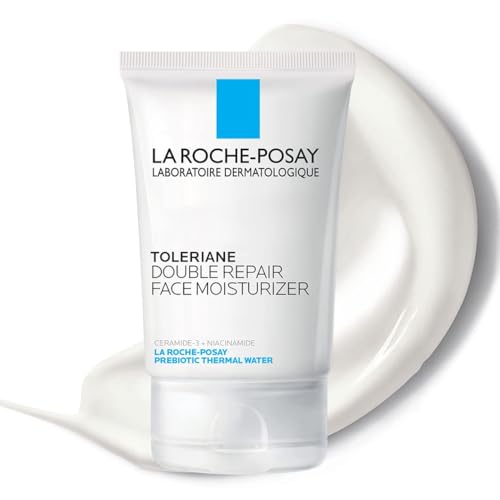
- Ceramide-based moisturizers. CeraVe PM and La Roche-Posay Toleriane Double Repair are the two clinician-recommended workhorses.
- Mineral sunscreens with non-nano zinc oxide.
- Gentle micellar water and cream cleansers. Bioderma Sensibio H2O is the classic.
Common questions
When exactly do I stop using retinol? At least 30 days before your stim cycle starts. Most REs recommend stopping at the start of your prep cycle (the one before stim) to give skin time to re-stabilize so any inflammation does not interfere with photography or imaging needed during monitoring.
Can I restart everything after a negative beta? Yes. You can resume your full routine 1 to 2 days after a confirmed negative pregnancy test.
What about during the two-week wait specifically? Treat it exactly like the first month of pregnancy. The implantation window is the most sensitive part of the cycle for chemical exposures. This is not the time to introduce new actives.
Do over-the-counter retinol products at very low concentration count? Yes. The OTC retinol concentration limit in the US (1%) is still a retinoid. Avoid it.
Are peptides ok? Yes, all peptide complexes (signal peptides, copper peptides, tetrapeptides) are considered safe during fertility treatment and pregnancy.
What to do next
- Walk through your bathroom shelf with the avoid list above.
- Move anything on the avoid list into a labeled box that you can put back into rotation after delivery or a confirmed negative beta.
- If you need replacements, the pregnancy-safe skincare category ranks the products we recommend by composite safety and effectiveness score.
- If you are within 30 days of stimulation, switch your sunscreen to a non-nano mineral formula tomorrow morning. UV exposure during stim can trigger melasma that lingers for years.
Medical disclaimer: This article is for informational purposes only and is not medical advice. Always consult your reproductive endocrinologist, obstetrician, or dermatologist before changing your skincare routine during fertility treatment.